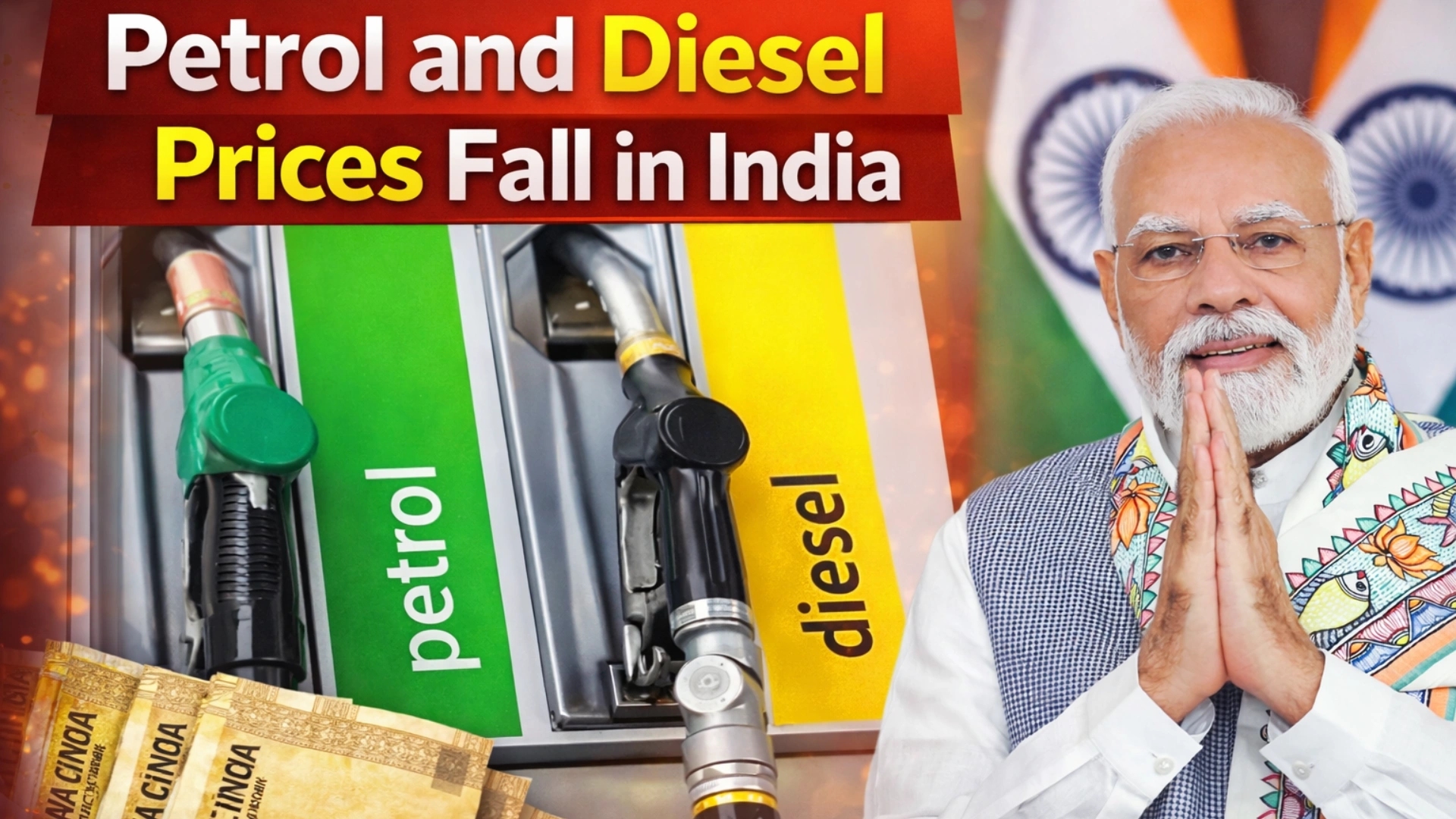
Petrol and Diesel Prices Fall in India: There’s some welcome news for Indian households this morning. Petrol and diesel prices have dropped, bringing a small but meaningful relief to daily commuters, transporters, and families managing tight budgets. With fuel prices affecting everything from grocery bills to travel costs, even a minor reduction quickly becomes a big talking point. If you’re wondering what caused the fall, how it may impact you, and whether prices could drop further, here’s a clear and friendly breakdown of today’s update.

Relief At Fuel Stations
Many people noticed lighter bills at petrol pumps today as revised fuel rates came into effect. This drop, though modest, is important because fuel prices influence almost every part of daily life. From office commutes to weekend travel plans, cheaper petrol and diesel can ease monthly expenses. For drivers who refill regularly, even a small cut per litre adds up over time, offering a sense of relief after months of price stability.
Why Prices Fell Today
Fuel prices in India are closely linked to global crude oil trends and currency movement. A recent softening in international crude oil prices, along with stable exchange rates, has helped oil marketing companies revise rates downward. Additionally, steady supply levels and manageable demand have played a role. While taxes remain unchanged, market conditions allowed companies to pass on some benefit directly to consumers at fuel stations.
Impact On Daily Expenses
Lower fuel prices don’t just help vehicle owners. Transport costs affect food prices, courier charges, and even public transport operations. When diesel becomes cheaper, logistics expenses reduce slightly, which can help control inflation at the consumer level. For families, this may translate into fewer price hikes on essential goods. Though the impact isn’t instant, consistent fuel price relief often supports overall household budgeting.
City Wise Rate Variations
Fuel prices in India still vary from city to city due to local taxes and transportation costs. Metro cities usually see similar trends, but the final price at the pump can differ slightly. Smaller towns may notice marginally higher or lower rates depending on regional factors. Motorists are advised to check their local fuel station or official apps for the latest city-specific petrol and diesel prices before refuelling.
What This Means For Commuters
For daily commuters, today’s price cut can make routine travel a little easier on the wallet. Office-goers using two-wheelers or cars will see some savings, while commercial drivers may benefit even more due to higher fuel usage. Over a month, this reduction can help offset other rising expenses. While it’s not a dramatic fall, it’s a positive move in the right direction for regular travelers.
Could Prices Drop Further
Many consumers are now asking whether this is the start of a bigger decline. Fuel price movement depends on international crude prices, government policies, and demand patterns. If global oil rates remain soft and economic conditions stay stable, further cuts are possible. However, sudden changes in global markets can also reverse trends quickly. For now, experts suggest enjoying the relief while keeping an eye on future updates.
Conclusion
Today’s fall in petrol and diesel prices brings timely relief to millions of Indians, especially those feeling the pressure of everyday expenses. While the reduction may seem small, its impact spreads across transport, household budgets, and overall consumer confidence. For now, the news is positive, and motorists can enjoy slightly lower fuel bills. Staying informed about daily fuel updates remains the best way to plan smarter and save more.